

Tennis and golfer's elbow treatment in Leytonstone, East London
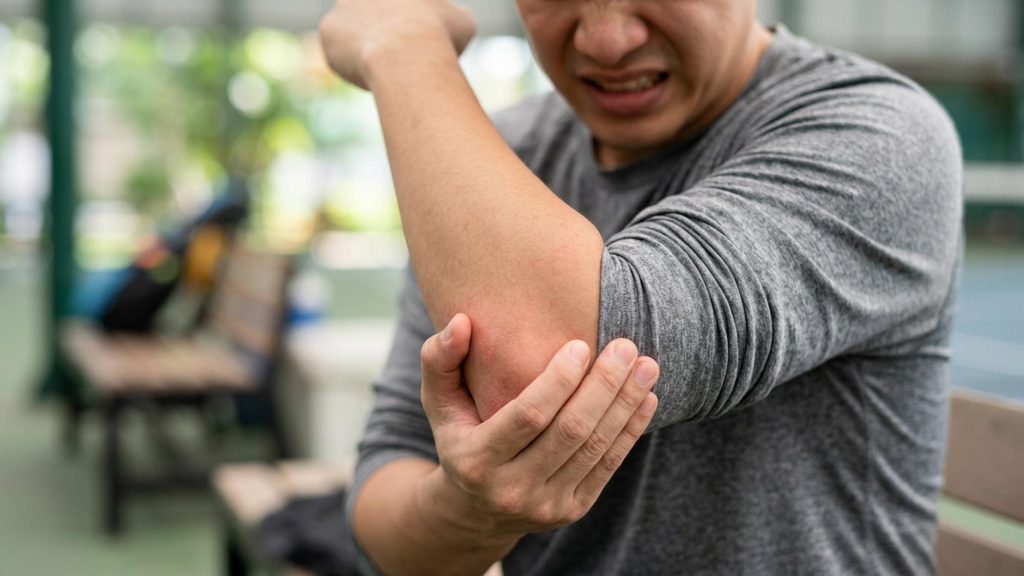
Tennis elbow and golfer’s elbow are two of the most common causes of elbow pain, and despite the names, they affect far more than just sportspeople. Both cause pain around the elbow that can make everyday movements like gripping, lifting or even shaking hands surprisingly uncomfortable, and both have a habit of lingering far longer than expected without the right care.
Osteopathy is well suited to conditions like these, since treatment addresses not only the painful tendon itself but the wider pattern of movement and loading that led to it, including how the neck, upper back and shoulder are working alongside the elbow, rather than the elbow in isolation.
What does tennis or golfer’s elbow feel like?
The two conditions affect opposite sides of the elbow, but share a similar pattern of symptoms:
- Pain and tenderness on the outer elbow (tennis elbow) or inner elbow (golfer’s elbow)
- Pain that can radiate down the forearm towards the wrist
- A weaker or less confident grip
- Discomfort with gripping, lifting, twisting or shaking hands
- Pain that builds gradually, often worse after repetitive use
- Stiffness in the elbow, particularly first thing in the morning
What causes tennis and golfer’s elbow?
Both conditions are forms of tendinopathy, caused by repeated strain on the tendons attaching the forearm muscles to the elbow. Despite their names, they are more commonly caused by everyday repetitive activity than by sport. Common contributing factors include:
Repetitive gripping, lifting or twisting movements
Repeated use of hand tools or equipment
Extended computer use, particularly typing and using a mouse
A sudden increase in an unfamiliar repetitive activity
Poor technique in racquet sports or golf, where the names originate
It is seen frequently in tradespeople who use hand tools, such as plumbers, electricians and decorators, as well as hairdressers, cooks and chefs, office workers who type extensively, gardeners, and, of course, tennis and golf players.
How osteopathy can help
Treatment begins with a thorough assessment to understand which tendon is affected and what pattern of movement or loading is contributing to it, since both conditions typically develop gradually and benefit from addressing the underlying cause, not just the painful spot. This includes looking at the neck, upper back and shoulder, since tension or restriction in this wider area is often closely associated with how the elbow is loaded and how well it recovers. Depending on what is found, treatment may include hands-on techniques to ease tension in the neck, upper back, forearm muscles and surrounding tissue, gentle mobilisation of the elbow, wrist and neck where relevant, and a tailored programme of exercises to gradually load and strengthen the tendon, which is often central to lasting recovery. Guidance on grip, technique and activity modification is usually part of the picture too, since continuing to aggravate the tendon in daily life can slow progress considerably.
These conditions often improve steadily with the right approach, though tendon-related pain can take patience, and a gradual, well-paced recovery tends to serve better than rushing back to full activity too soon.
When to seek help sooner
Tennis and golfer’s elbow are rarely a cause for urgent concern, but it is worth having persistent elbow pain properly assessed rather than assumed. Seek prompt medical attention if elbow pain follows a significant injury, is accompanied by visible deformity or an inability to move the joint, or comes with numbness or weakness spreading down the arm, as these warrant a closer look.
Frequently asked questions
Do I have to play tennis or golf to get these conditions?
Not at all. Despite the names, both are very often caused by everyday repetitive activity, such as typing, using tools, or repeated lifting, rather than sport.
Should I stop using my arm completely?
Usually not, though certain aggravating movements are often best reduced or modified for a while. Complete rest can sometimes make tendons weaker, so a graded, guided approach is generally more effective than avoiding all use.
How long does recovery usually take?
Tendon-related pain can take longer to settle than muscular pain, sometimes several weeks to a few months, particularly if it has been present for a while before treatment begins. Consistency with any exercises given tends to make a real difference to how quickly things improve.
Getting started
Book with Luke
Quick online booking, evening appointments available

A note before you read on
Claims relating conditions are made in line with Advertising Standards Authority (ASA) and CAP guidance on the evidence for osteopathic treatment. An individual assessment is the only way to establish whether treatment is suitable for you.
Read more about other conditions and treatments.