Making Osteopathy easier to reach

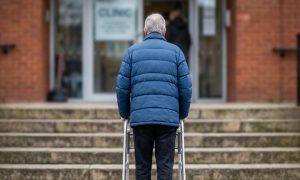
An elderly gentleman, with a walker is faced with a daunting set of steps to overcome

Why accessibility matters to me

By Luke Askew B.Ost
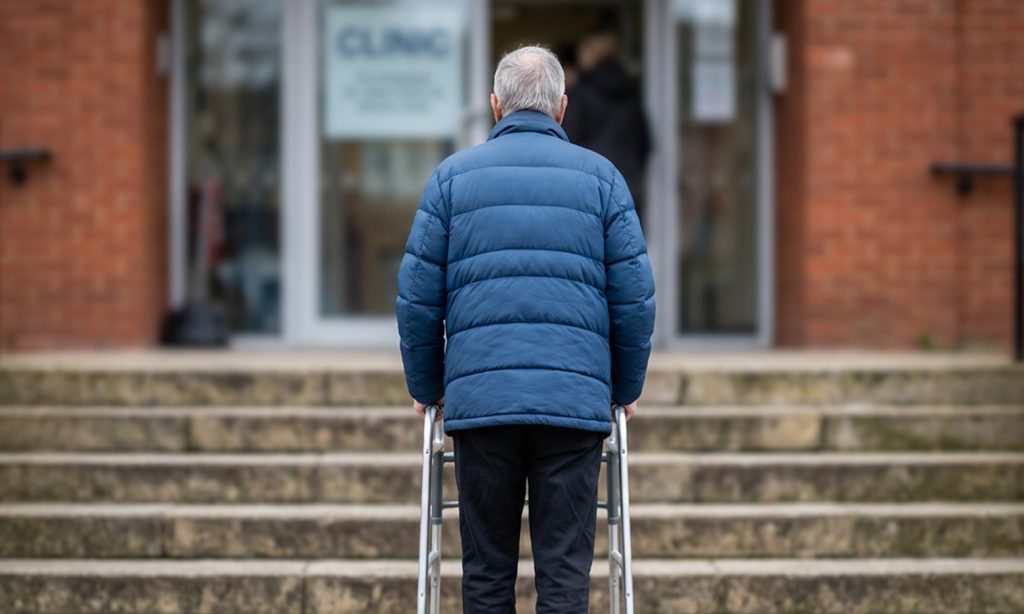
An elderly gentleman, with a walker is faced with a daunting set of steps to overcome

When people ask me who osteopathy is for, my answer is always the same: everyone. But for a long time I’ve been uncomfortably aware that “everyone” only really holds true if people can actually get through the door and for anyone living with a mobility challenge, that has too often been far from guaranteed.

Over the years I’ve spoken to people who’d put off seeking help, not because they doubted treatment could ease their pain, but because the practical business of getting there felt like too much. A flight of stairs with no alternative. A doorway too narrow for a wheelchair or a frame. No lift, no accessible toilet, nowhere comfortable to wait. These are the quiet barriers that decide, long before any clinical conversation, whether a person feels welcome. It never sat right with me that the people who often stand to benefit most from hands-on care, those managing pain, recovering from injury, or simply finding everyday movement harder, were sometimes the ones least able to reach it.

That’s why increasing the reach of the clinic, and making it genuinely inclusive, became something I cared deeply about getting right.

A clinic selected with access in mind

The new clinic was chosen and set up with these challenges key to the selection. There’s step-free access into the building through a wide, easy entrance with no awkward thresholds to negotiate. A lift reaches every floor, so stairs are simply never part of the equation. And the waiting area is a comfortable space right beside both an accessible toilet and is just a shot distance from the clinic room itself, so there’s no long or difficult journey once you’re inside.

None of that is glamorous, and that’s rather the point. Good accessibility shouldn’t feel like a special arrangement, it should feel like the building was simply made for you, too. My hope is that from the moment someone arrives, the visit feels easy and stress-free, with the practicalities taken care of so we can focus on what they actually came for.

Why saying so matters

Here’s something I’ve noticed: even where access is reasonable, clinic websites very rarely mention it. Look around at how practices present themselves online, osteopathy included. Physical accessibility is one of the most commonly overlooked details. It’s nobody’s deliberate failing; it’s just rarely thought of as something worth writing down.

For someone weighing up whether they can manage a visit, that silence is a real problem. It leaves them to guess, or to make an awkward phone call to ask whether they’ll be able to get in, a small ask that can carry a surprising amount of anxiety. Simply stating clearly what’s available removes that uncertainty entirely. That’s why we’ve set out the clinic’s accessibility in plain terms, rather than leaving people to find out the hard way. If being explicit about it nudges other practices to do the same, so much the better.

Access is more than just the front door

Reaching a clinic isn’t only a physical matter, of course. A growing number of people experience the web through screen readers, keyboard navigation and other assistive technology, and a website that ignores them is its own kind of locked door. So alongside the building itself, we’ve been actively improving the accessibility of the new website, working steadily towards recognised accessibility standards so that finding information, reading it and booking an appointment is straightforward for as many people as possible. It’s ongoing work, and we’re committed to it, because access that stops at the threshold isn’t really access at all.

An open door

Osteopathy has so much to offer people of every age and ability, and I never want the way to it to be the thing that holds someone back. If you’ve previously found clinics difficult to reach, or you simply want to know what to expect before you arrive, please do get in touch, and come and see a clinic premises that’s been selected with everybody in mind.

Clinic address

Leytonstone Osteopathy is at 209 CECOS House, 11 Kirkdale Road, E11 1HP.
A photo of Luke Askew
Luke Askew

Book a session

If you are experiencing issues with access to clinics for treatment, book with Luke at Leytonstone Osteopathy.

Book with Luke

Quick online booking, evening appointments available
A photo of Luke Askew

Clinic hours

  • Mondays 08:00 - 19:00
  • Tuesdays 08:00 - 19:00
  • Wednesdays 08:00 - 19:00
  • Thursdays 08:00 - 19:00
  • Fridays 08:00 - 19:00
  • Saturdays Closed
  • Sundays Closed
A photo of Luke Askew
Luke Askew

Clinic hours

  • Mondays 08:00 - 19:00
  • Tuesdays 08:00 - 19:00
  • Wednesdays 08:00 - 19:00
  • Thursdays 08:00 - 19:00
  • Fridays 08:00 - 19:00
  • Saturdays Closed
  • Sundays Closed
A photo of Luke Askew

Book with Luke

Or book online below.

A photo of Luke Askew
Luke Askew

Studio Pilates

Studio sessions are currently full, but spaces do open up. Leave your details and you’ll be the first to know when one does.

Daily Pilates classes

Interested in joining the daily online Pilates classes? Leave your details and you’ll receive everything you need to take the first step, including the commitment.

Register interest in Pilates

Whether you’re committed to either Studio Pilates, or the daily 20 minute classes or both, please fill out the form below and Luke will get back to you. Usually, a reply can take up to a few days.

Great! We’ve received your information.

We couldn’t process your submission. Please retry

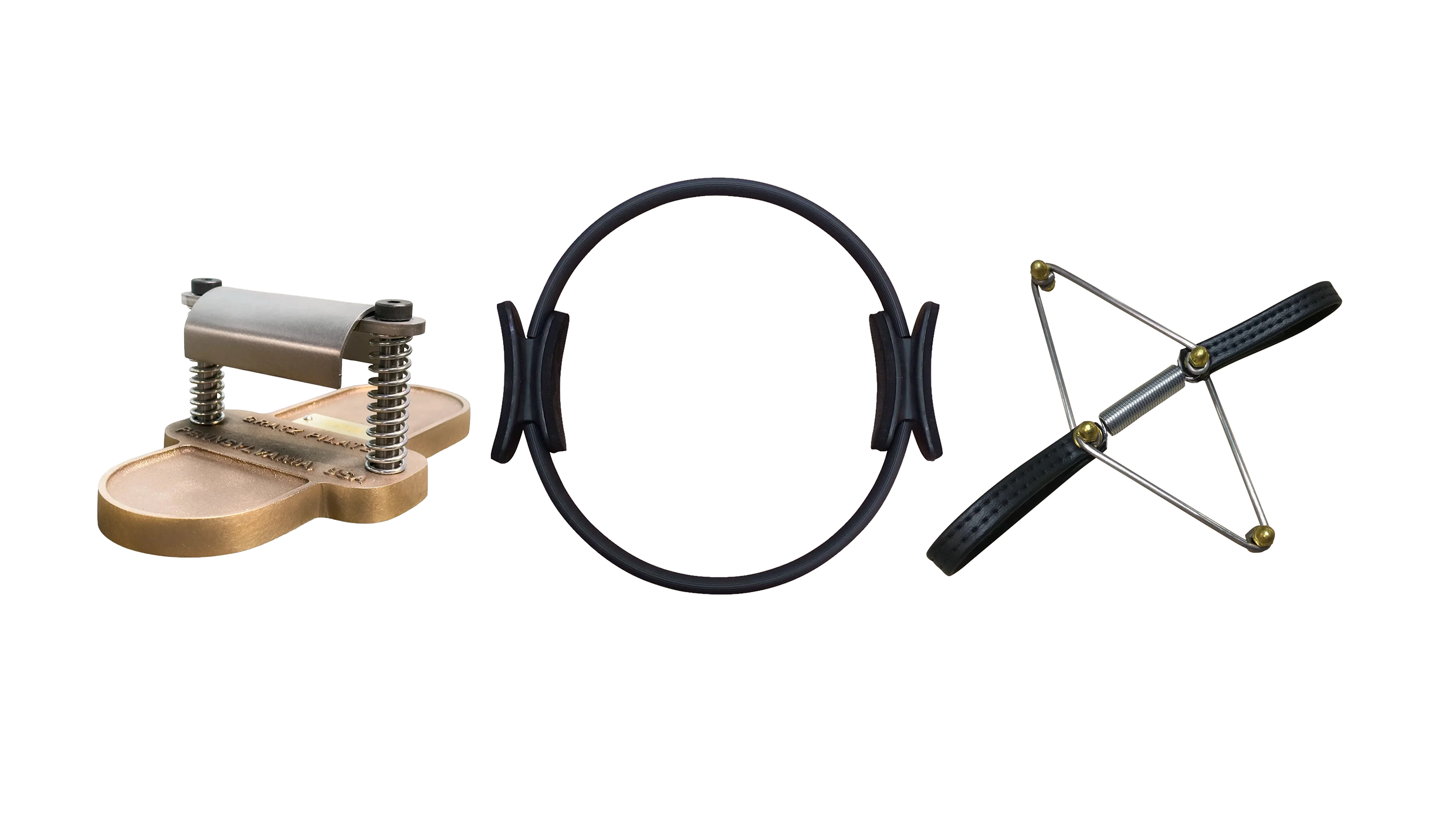
Supporting small props

Small, supporting Pilates studio equipment

About the props

The smaller props are the studio’s fine-tuning tools. Where the larger apparatus does the heavy lifting, pieces like the Magic Circle (also known as the Pilates ring), resistance bands, stability balls, hand weights and foot correctors add precision, variety and an extra layer of challenge to every session. They’re light, portable and endlessly adaptable, which makes them ideal for honing in on a particular muscle group, refining alignment, or adding just enough resistance to make a familiar movement work that bit harder.

Their real value is in the detail. The Magic Circle offers gentle, springy resistance that wakes up the deep stabilising muscles of the core, inner thighs and arms. Resistance bands add controlled load through a movement’s full range, perfect for building strength safely and steadily. Stability balls challenge balance and core control, while hand weights and foot correctors sharpen coordination and the small but important alignment of the shoulders and feet. Worked one-to-one, these props let each exercise be tailored to the finest degree — dialling the effort up or down so the work always lands at exactly the right level, whatever the age or stage.

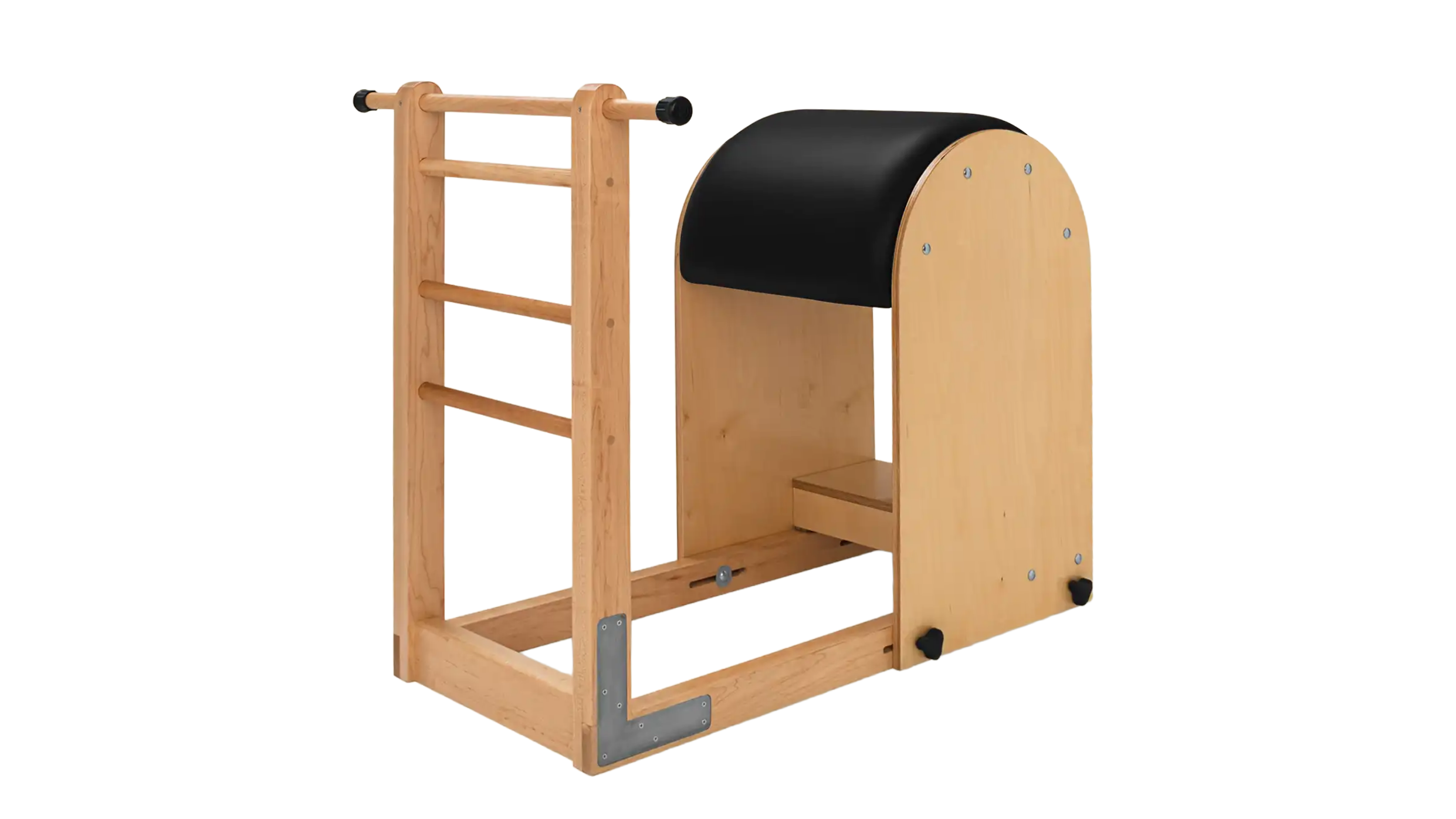
Ladder Barrel

An image of a Ladder Barrel image

About the Ladder Barrel

The Ladder Barrel is the studio’s specialist in length and openness. Its curved, padded barrel and adjustable ladder of rungs are shaped to support the spine as it extends and lengthens, making it the natural antidote to a life spent hunched over desks, steering wheels and devices. Where so much of the day rounds the body forward, the Barrel gently coaxes it the other way.

Draped over the barrel, the spine is supported through movements that would be difficult to perform safely unaided, opening the chest, mobilising a stiff upper back, and stretching out the hip flexors and the whole front line of the body that sitting keeps short and tight. Alongside that mobility work, it builds strength through the back and core and trains side-bending and rotation, so the spine becomes not just looser but stronger and more controlled in every direction.

The result is a body that stands taller, moves more freely and simply feels more comfortable, whether the aim is undoing a desk-bound day, restoring posture in later years, or keeping an active body supple and resilient.

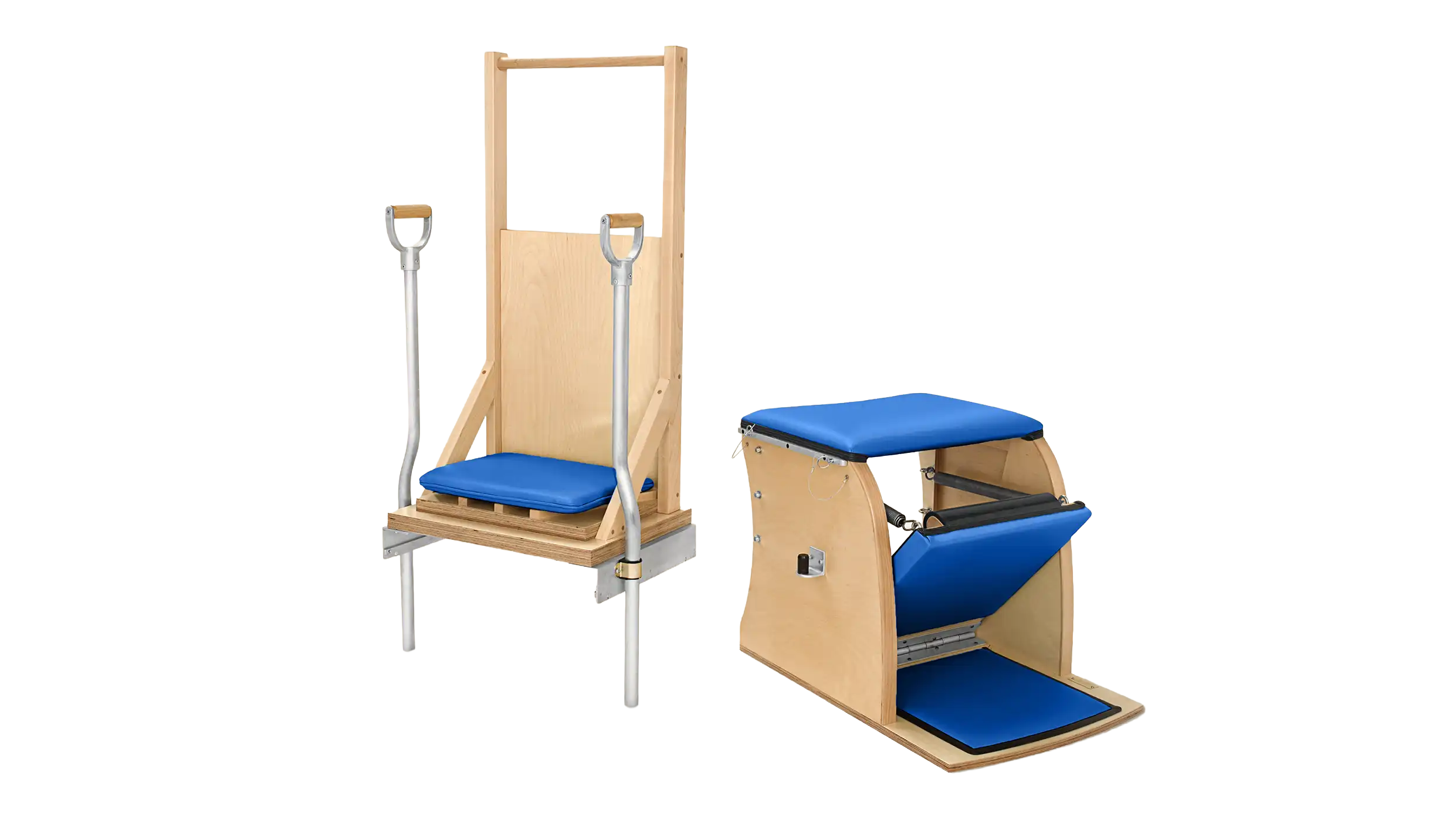
Wunda Chair

About the Wunda Chair

Compact but deceptively demanding, the Wunda Chair is one of the most challenging — and rewarding — pieces in the studio. Little more than a padded box with a spring-loaded pedal, its small surface gives the body far less to lean on, so almost every exercise becomes a genuine test of stability and control. There’s nowhere to hide on the Chair, and that’s precisely what makes it so effective.

That constant demand for control is what builds real, functional strength — the kind that transfers directly into everyday life, from climbing stairs and rising from a seat to simply staying steady on your feet. Worked through standing, seated and lying positions, it trains the legs, arms and core while continually sharpening balance and coordination. And because the spring resistance can be adjusted, the very same piece of equipment can gently build confidence and stability for one person, or push a strong, experienced body hard for another.

Whether the aim is steadier balance in later life, a stronger foundation for sport, or just moving through the day with more ease, the Wunda Chair delivers a great deal from a remarkably small footprint.

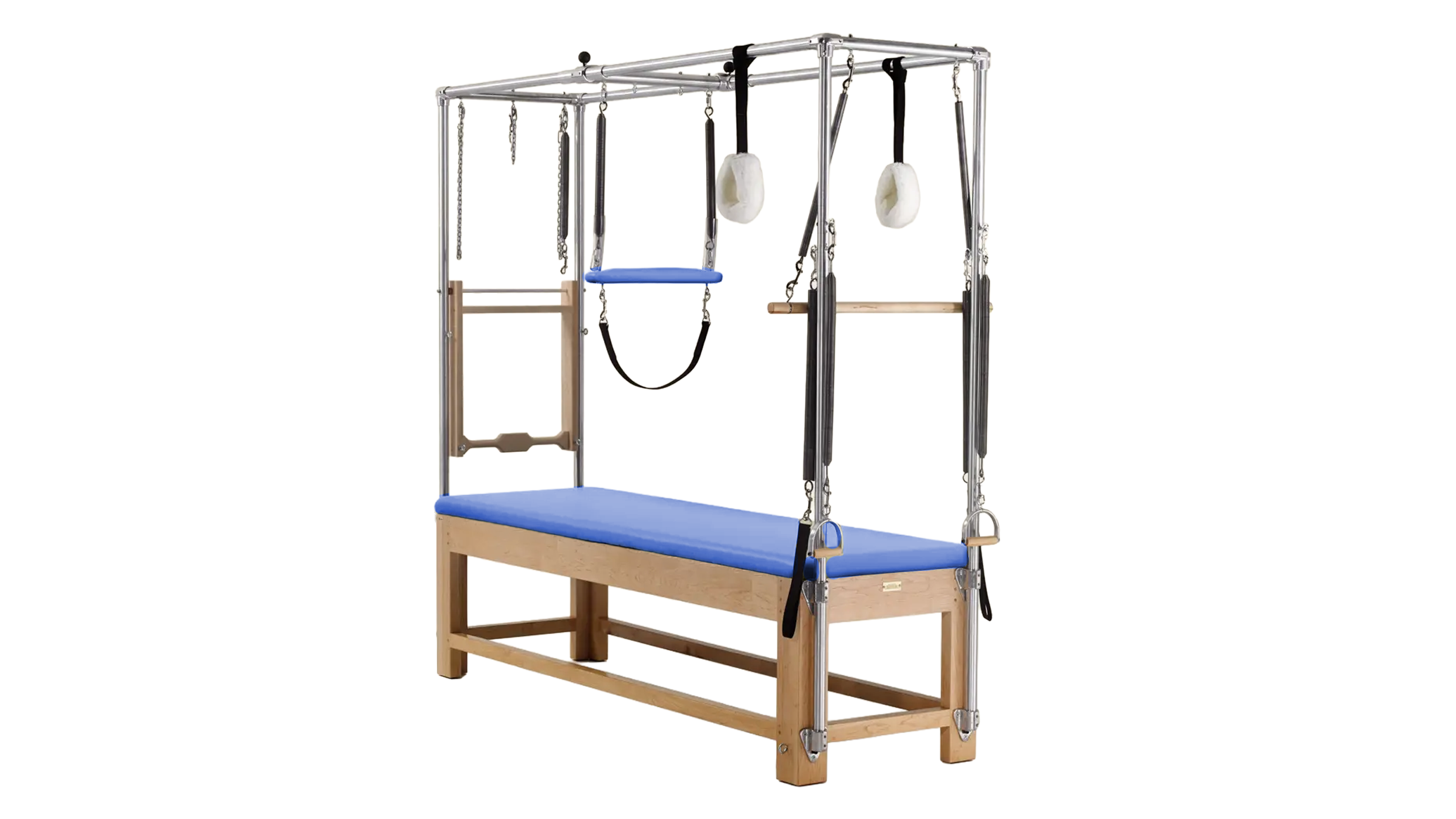
Cadillac (Trapeze Table)

About the Cadillac

The Cadillac is the studio’s most striking and adaptable piece of apparatus — a tall, sturdy frame built over a padded table, fitted with a push-through bar, roll-down bar, leg and arm springs, hanging straps and a trapeze. That array of attachments is what gives it such extraordinary range: it can hold and support almost the entire body weight for someone easing gently into movement, or become a genuinely demanding piece of equipment for dynamic, suspended work at the other end of the scale.

This versatility is exactly why it’s so valuable across every stage of life. The springs can take the strain out of a movement — guiding and assisting the body so that tight, stiff or deconditioned areas can be worked safely and without fear — which makes it especially well suited to restoring mobility, easing long-held tension and rebuilding confidence after a quiet or painful spell. The same frame is equally adept at spinal articulation and decompression, gently lengthening the spine and relieving the pressure that builds from years of sitting and standing.

Worked one-to-one, the Cadillac becomes a precise tool for opening the body up, restoring range of movement and building controlled strength through it — meeting each person exactly where they are, then progressing steadily from there.

Reformer

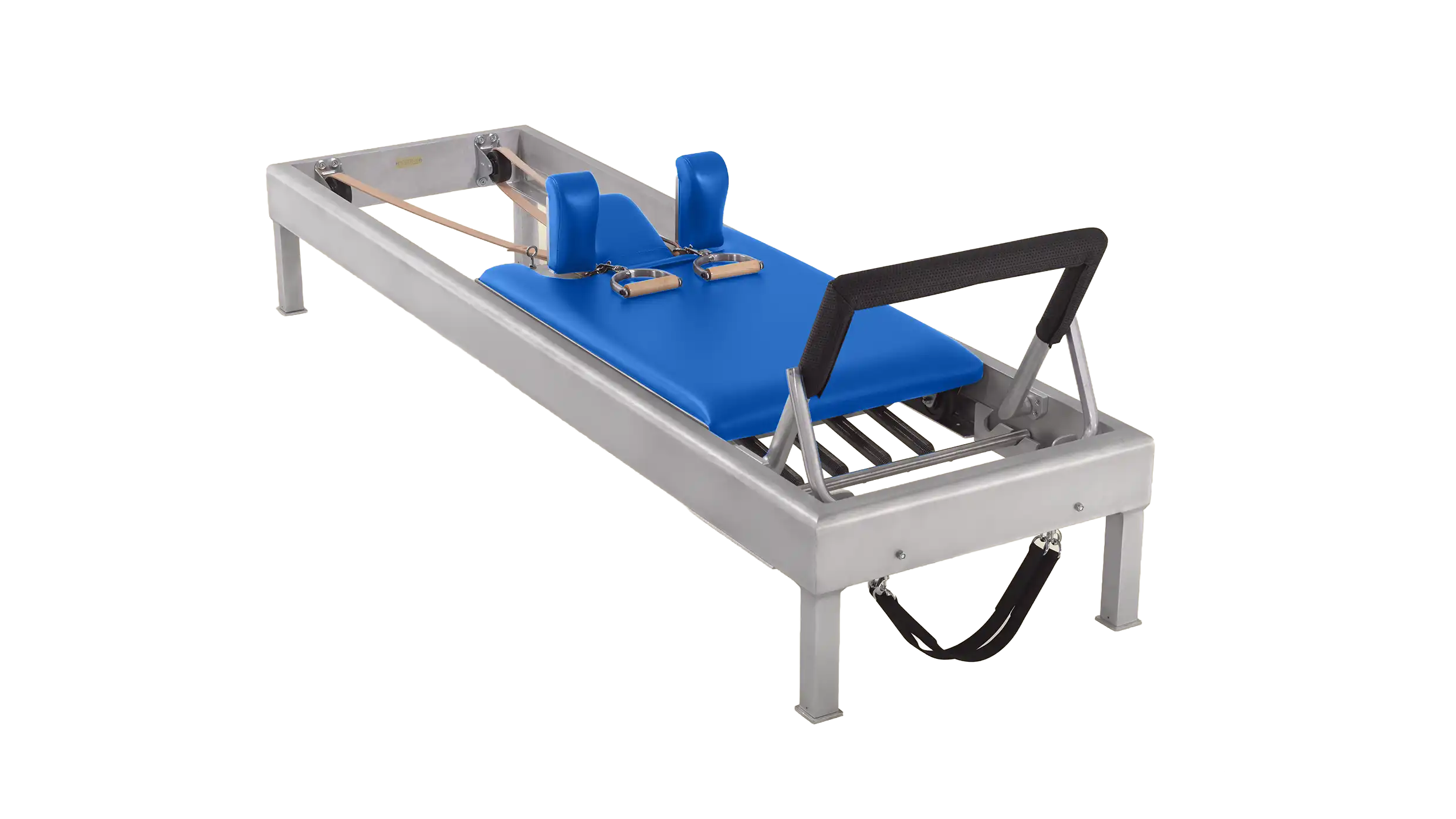
About the Reformer: The heart of the studio

The Reformer is where most sessions begin and end, and for good reason. Its sliding carriage and adjustable spring resistance let movement be made gentler or more challenging in an instant, supporting the joints while still building genuine, functional strength. That adaptability is exactly what makes it so powerful across every stage of life: the same machine can ease someone gently back into movement after a quiet spell, refine an athlete’s control, or rebuild strength and stability in later years.

It works the whole body through smooth, controlled, low-impact movement, training strength, flexibility, balance and coordination together rather than in isolation.

Few pieces of equipment can be tailored so precisely to the individual, which is why it earns its place at the centre of the studio.

A photo of Luke Askew
Luke Askew (Principal)

Luke's usual class

  • Thursdays 08:00

About Luke

Registered osteopath and founder of the classes, Luke has helped patients across East London recover from back pain, postural problems and sports injuries since 2010, blending hands-on osteopathy with clinically modified Pilates. A qualified Pilates teacher and former professional dancer, his movement background shapes a precise, efficient approach built around how the body actually works.

Read Luke’s Osteopathy profile

Note: Class days are shared across the team and may occasionally change to cover holidays, leave or other commitments.

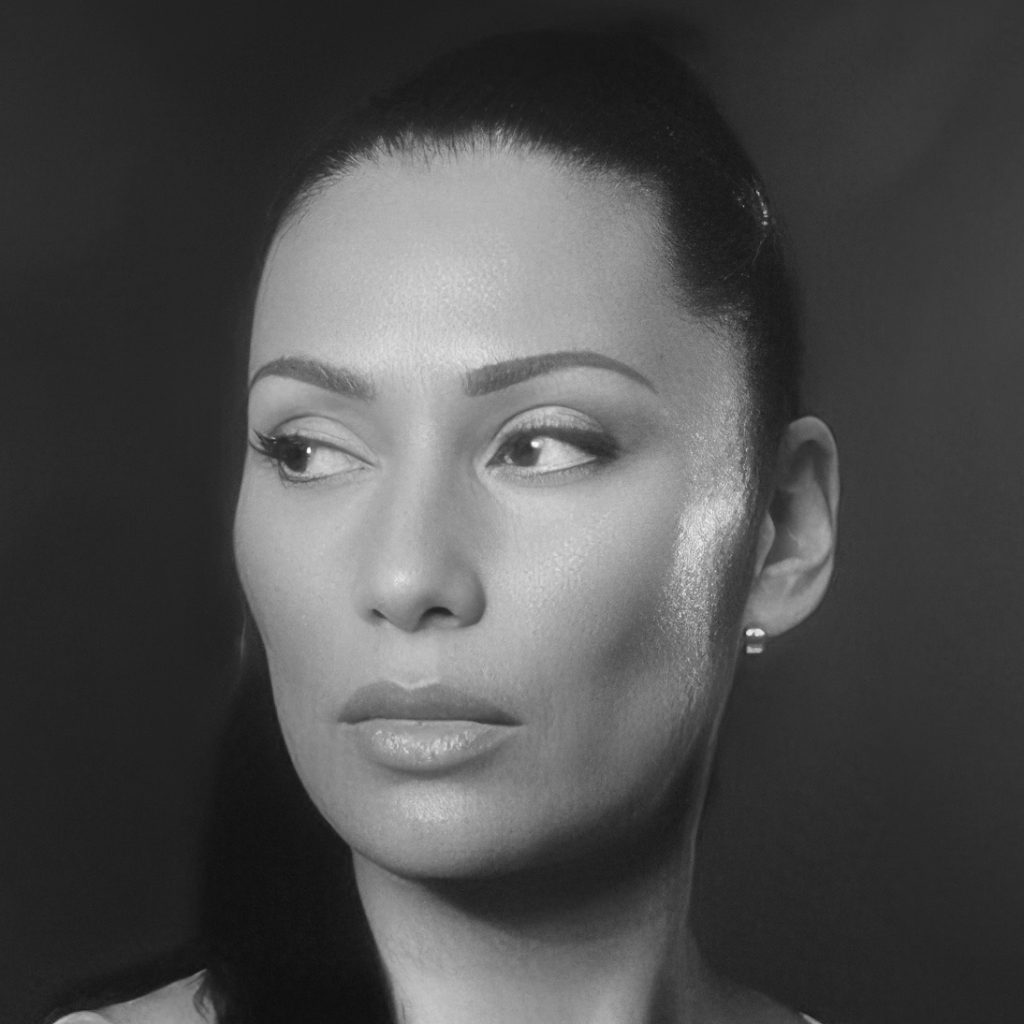
Carrie Paechter headshot
Carrie Paechter

Carrie's usual classes

  • Fridays 08:00

About Carrie

Lorem ipsum dolor sit amen…

Note: Class days are shared across the team and may occasionally change to cover holidays, leave or other commitments.

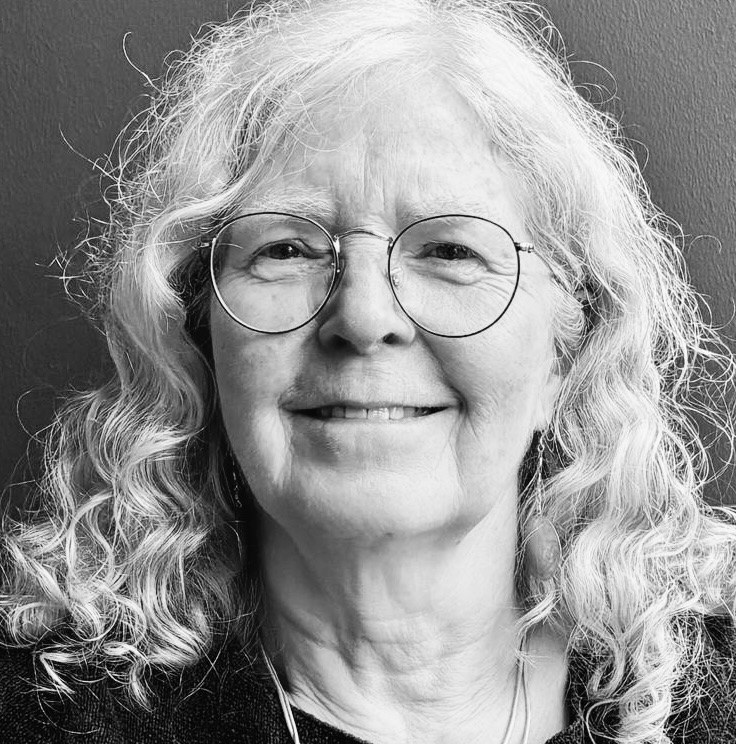
A photo of Liz Higginbottom
Liz Higginbottom

Liz's usual classes

  • Tuesdays 08:00
  • Wednesdays 08:00

About Liz

Liz encourages honesty on the mat; honest with where you are in your physical, mental & emotional self every time you practice. Expect morning classes with Liz that allow the human aspect of practice, as well as a continual deepening of the Pilates mat work.

A teacher for over 23 years, Liz leads lessons in Hatha, Vinyasa, relaxation & meditation, Yin, Restorative, Ante & post natal yogas, as well as Pilates mat work, Barre, Strength & Conditioning & injury recovery/prevention.

Note: Class days are shared across the team and may occasionally change to cover holidays, leave or other commitments.

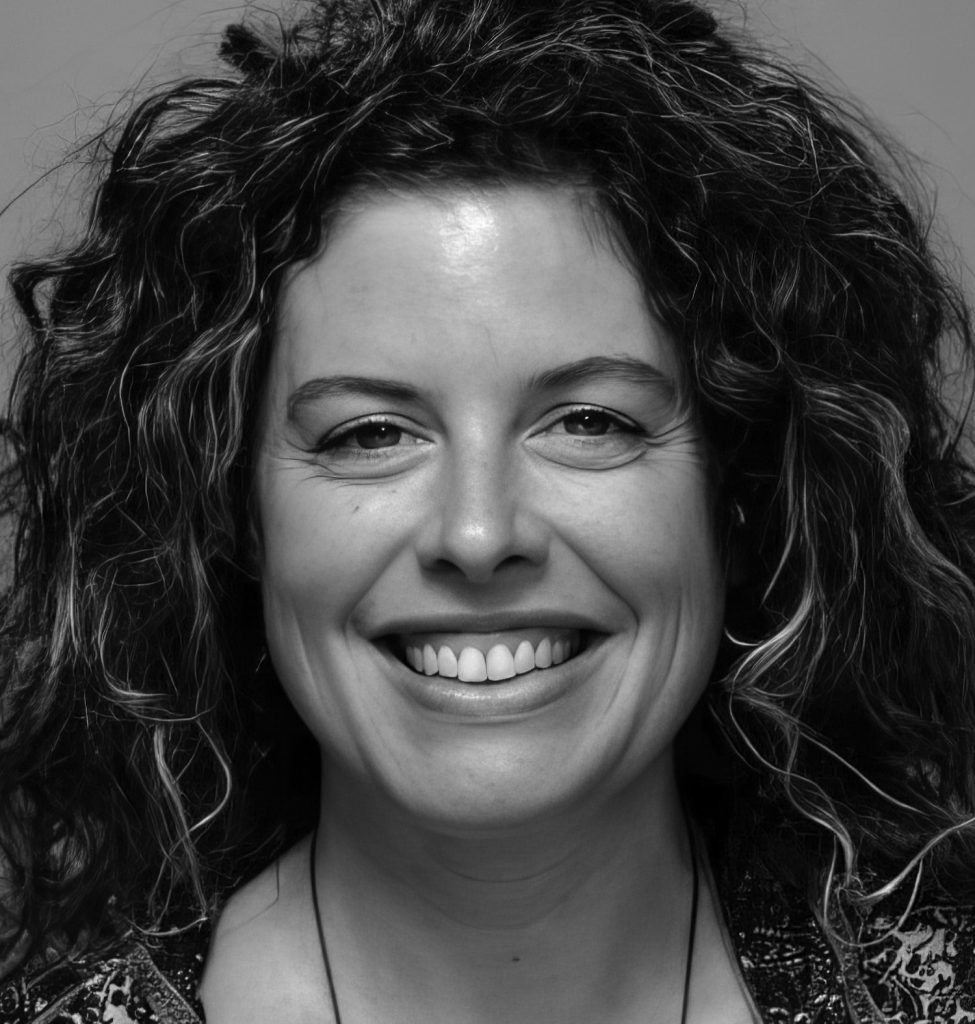
A photo of Kate Burdett
Kate Burdett

Kate's usual classes

  • Mondays 08:00

About Kate

Kate is a Romanas Pilates Certified Teacher with over 15 years of experience.

Kates unique approach goes beyond just fitness – she helps you forge a mind-body connection that delivers real lasting results whatever stage of life you are in. Her passion for wellness and helping others drives her to continually learn and educate, bringing the best out of you and your session.

Note: Class days are shared across the team and may occasionally change to cover holidays, leave or other commitments.